Does Medora license roofing contractors?
Medora does not require state level licensing for all roofing contractors, which surprises many Medora homeowners and is exactly why independent verification matters so much here. Without a single state license to point to, the burden is on you to confirm a contractor is legitimate through other means: a current certificate of insurance verified with the carrier, a business registration on your state's Secretary of State website, manufacturer certifications confirmed in the manufacturer's directory, and a solid record on the BBB and review platforms. Some local jurisdictions may have their own business license or permit requirements as well. The absence of a blanket state license should push you toward more verification rather than less, because the checks you run yourself are what separate a real Medora contractor from an operation that could not pass them.
What insurance should a roofer carry?
At a minimum, a Medora roofer should carry general liability insurance, commonly at least a million dollars per occurrence, and workers compensation covering everyone on the crew, plus commercial auto for their vehicles. Workers compensation is the one homeowners most often overlook and the one that matters most to you, because if a worker is injured on your property and the contractor lacks coverage, that liability can land on you. The way to confirm it is to request the certificate of insurance from the carrier directly rather than accepting a photocopy, then call the carrier to verify the policy is active and the coverage amounts are current. That phone call takes a few minutes and is the difference between real protection and a forged or expired certificate. Any contractor reluctant to let you verify insurance is showing you a problem before the work even starts.
How important are manufacturer certifications?
They matter as a signal and as a path to better warranty coverage, though they are one factor among several rather than the whole decision. A manufacturer certification means the contractor completed training and met the manufacturer's standards, and on a Medora roof it can unlock extended warranty programs that uncertified contractors cannot offer. The important part is that the certification be real and current, which you confirm in the manufacturer's own contractor directory rather than from a logo on a truck or a flyer. A certification that does not appear there is not genuine, and one that lapsed signals a contractor who stopped maintaining the standard. Weigh a verifiable current certification as a meaningful plus, alongside insurance, local presence, references, and warranty terms, rather than treating any single credential as the entire test.
How do I spot a storm chaser?
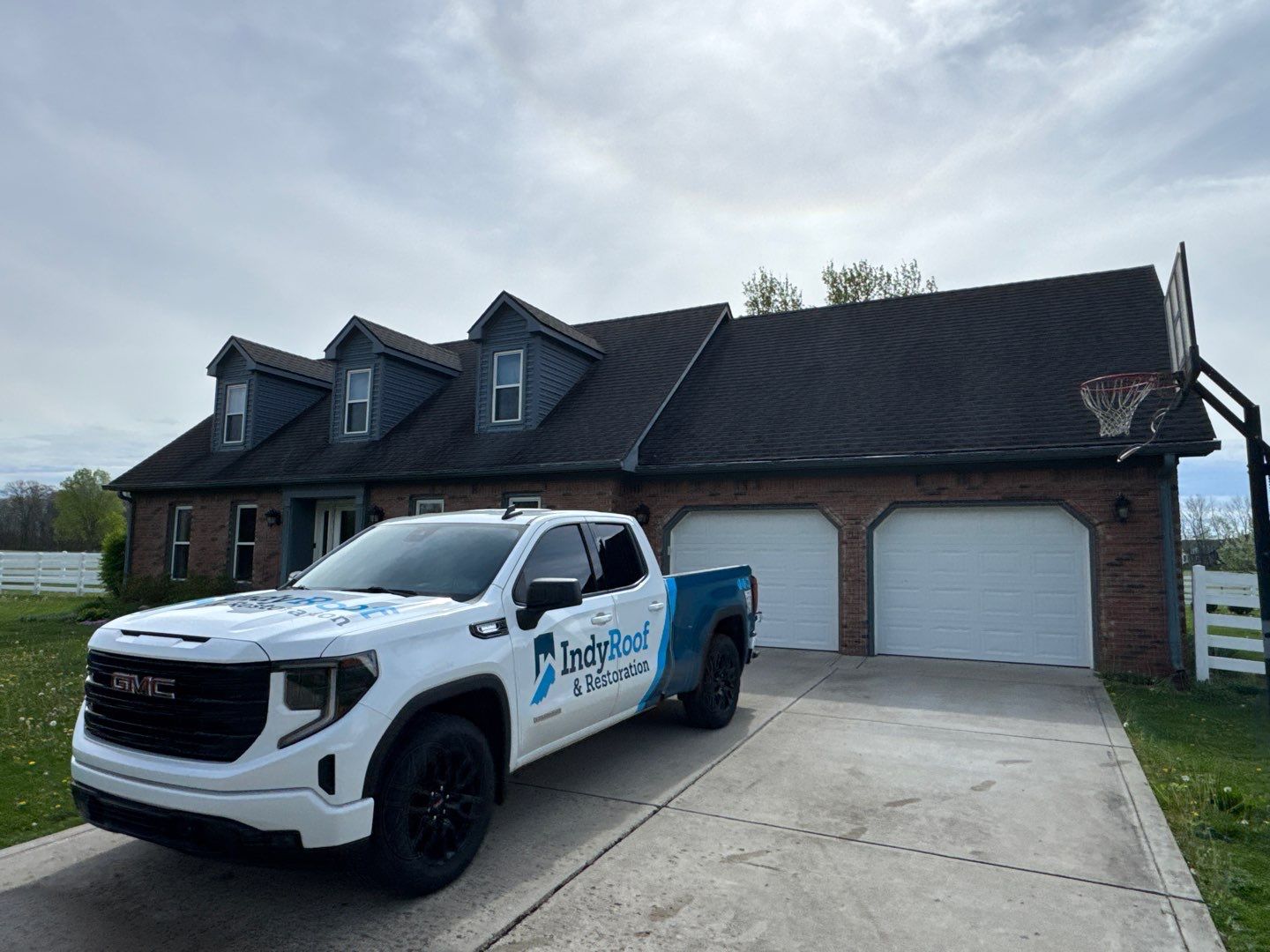
Storm chasers follow weather across the country and set up in Medora within days of a major event, so the markers are fairly consistent. Watch for door to door canvassing after a storm, pressure to sign immediately, out of state plates on all the trucks, a phone number that routes to a call center rather than a local area code, a temporary or PO box address, and a business name with no history before the storm. Reviews can give it away too, when a burst of them appears right after a weather event and then nothing. None of these alone is proof, but several together are a strong pattern. The deeper issue is the model itself: the operation is built to extract value from a storm season and move on, which is precisely why it cannot stand behind a warranty in year four. A local company that was here before the storm is the safer choice.
Should I always pick the lowest bid?
No, and on a roof the lowest bid is often the most expensive choice once the project is underway. Price only means something when the scope behind it is identical, which is why every bid should be itemized. A quote that comes in far below the others usually got there by leaving things out: cheaper underlayment, ice and water shield skipped in the valleys, reused flashing, or a thin decking allowance that becomes a change order. When you compare an itemized lowball against a complete quote, the missing scope shows up, and the apparent savings evaporate. The better question than which bid is cheapest is which bid covers what the roof actually needs at a fair price. For most Medora homeowners, the right contractor is the one whose scope and warranty justify the number, not simply the one with the smallest total.
What questions should I ask before signing?
A handful of questions reveal most of what you need to know about a Medora roofer. Ask to see the current certificate of insurance, what manufacturer certifications they hold, how long they have operated locally, and for three to five recent local references you can actually call. Ask exactly what the written quote includes, what the workmanship warranty covers and whether it transfers, how unexpected issues like rotted decking are handled, the payment schedule, who your point of contact will be, and how weather delays are managed. Quality contractors answer all of this thoroughly and without hesitation, because they have nothing to hide. Vague, evasive, or annoyed answers are themselves an answer. The questions are less about catching anyone out and more about confirming the company is who it says it is before you commit a decade plus investment to them.
How big a deposit is normal?
A reasonable roofing deposit is modest, commonly in the range of ten to twenty five percent of the project to cover materials, with the balance due after the final walkthrough once you have approved the work. Some contractors take an optional progress payment after tear off on larger jobs, which is fine. What is not normal is a demand for half or more up front, full payment before materials arrive, or cash only, all of which point to a contractor without established supplier credit and, often, to financial instability or a scam. A stable Medora company with real supplier relationships does not need to finance the job out of your pocket. If a deposit demand feels large, ask directly why so much is needed up front, and treat an unconvincing answer as the warning it usually is.
How long should vetting take?
Proper vetting of a Medora roofer usually takes somewhere in the range of a week to a week and a half, and that time is well spent on a decade plus investment. The rough sequence is a couple of days to identify a few candidates and get inspections and written estimates, a day or two to verify licensing, insurance, and certifications, time to read reviews across platforms, and a round of reference calls before the final decision. A quality roof replacement takes time to schedule anyway, so a careful vetting window rarely delays the actual work. Any contractor who pressures you to skip this process should be removed from consideration on that basis alone, because quality contractors understand that thorough verification protects both sides and they encourage it rather than resisting it.
What warranties should I get?
You should get two, in writing, before work begins. The manufacturer warranty covers the shingles themselves against material defects, typically for a long term, and is strongest when the roof is installed by a contractor the manufacturer certifies. The workmanship warranty covers the contractor's installation, and its length and terms vary widely from one Medora company to the next. Read the fine print on both. Ask what voids each one, whether the workmanship warranty transfers if you sell your home, whether it is prorated or pays full value over time, and how a claim is actually filed. A transferable workmanship warranty adds resale value, and a clear claim process is what makes the warranty real rather than decorative. Vague answers about warranty coverage usually signal terms that will not hold up when you need them most.